

Joylux releases real-world analysis of 23,000+ women finding menopause operates as an interconnected symptom network
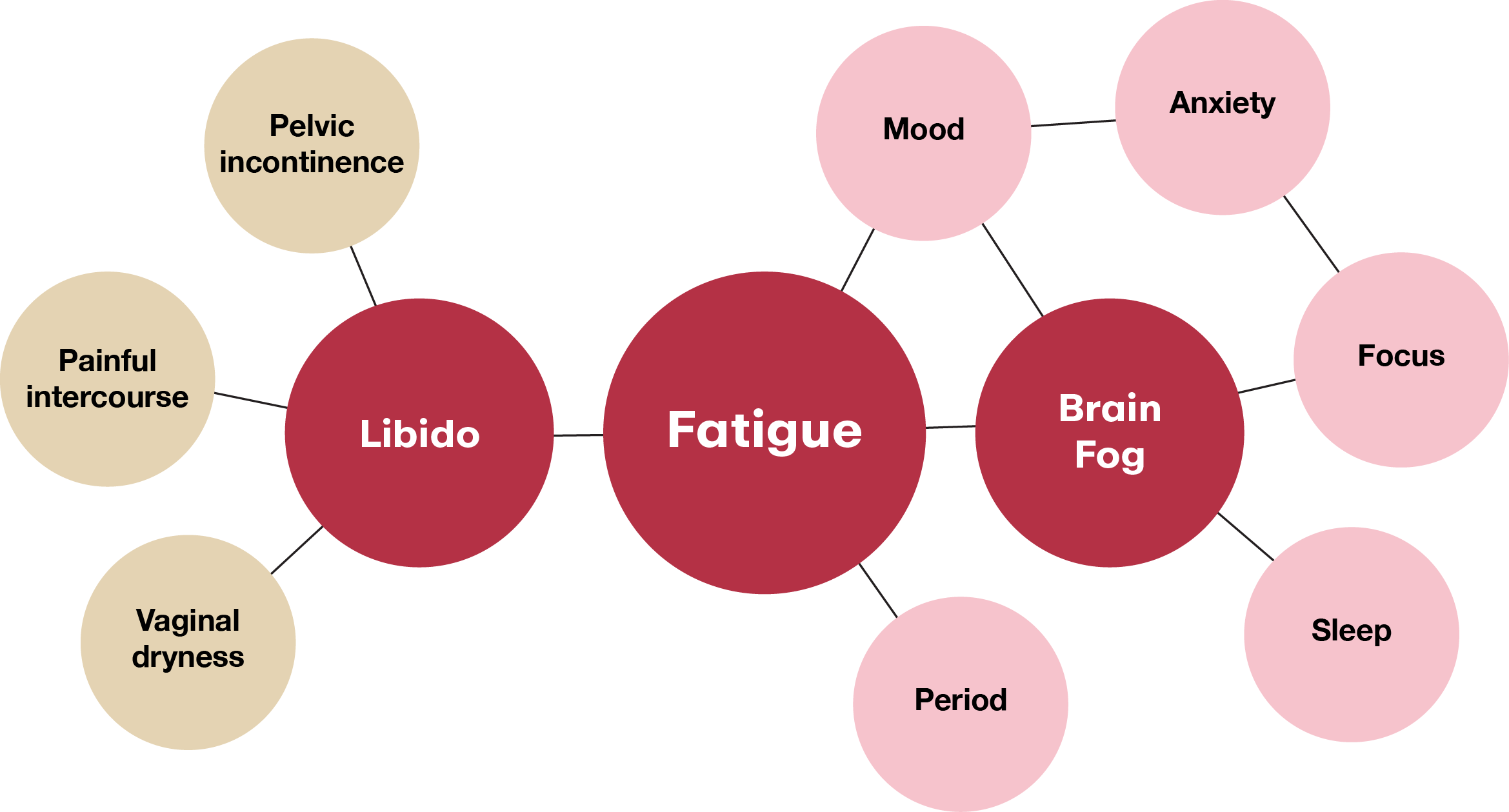
Menopause symptoms are a structured, interconnected system in which fatigue, cognition, mood, sleep, vasomotor, and genitourinary symptoms are statistically and clinically linked.
The report, authored by Dr. Sarah de la Torre MD, FACOG, DipABLM, Dr. Elizabeth Knight PhD, DNP, and Lexeigh Kolakowski, applies tetrachoric correlation analysis, hierarchical clustering, and Ising network modeling to symptom data collected over three years through the Joylux digital health platform. The findings provide large-scale quantitative support for what menopause clinicians have long observed: symptoms rarely occur in isolation and may be better understood as part of a coordinated neuroendocrine transition.
"Menopause specialists have understood these connections in clinical practice for years," said Dr. Sarah de la Torre, OB-GYN and Chief Medical Officer at Joylux. "What a dataset of this size allows us to do is quantify them. When fatigue, cognitive symptoms, mood changes, sleep disruption, and libido concerns appear together with this kind of statistical regularity and when the network structure remains stable across perimenopause and postmenopause it strengthens the case for evaluating and treating menopause as a connected physiological transition rather than a series of unrelated complaints."
Key findings include:
Fatigue emerged as the most centrally connected symptom in the network, with the highest closeness and betweenness centrality of any symptom measured, nearly double the next highest, linking neurocognitive, vasomotor, somatic, sexual, and genitourinary domains, positioning it as a potentially important clinical signal rather than a nonspecific complaint.
Brain fog and focus difficulty showed the strongest pairwise relationship in the dataset (r = 0.86), within a tightly connected cognitive-emotional cluster that includes anxiety, mood, and sleep disruption, reinforcing that cognitive symptoms are core features of the menopause transition.
Libido functioned as a "bridge symptom," strongly anchored within the genitourinary cluster while also connecting to fatigue and mood, suggesting it may serve as an integrative signal of overall physiological and emotional state, not solely a sexual health concern.
The symptom network architecture remained stable across perimenopause and postmenopause, even as prevalence shifted. Neurocognitive and vasomotor symptoms were significantly more prevalent in perimenopause- fatigue (45.1% vs. 30.8%), brain fog (43.3% vs. 28.7%), and anxiety (31.7% vs. 18.9%), indicating the network is active well before many women would traditionally be recognized as menopausal.
The findings extend insights from longitudinal cohort studies including the Study of Women's Health Across the Nation (SWAN), which established that menopause symptoms often begin years before the final menstrual period and frequently cluster together. The Joylux analysis adds quantitative architecture to that observation by identifying not only which symptoms co-occur, but which occupy central and bridging positions within the broader symptom system.
"There is enormous value in studying women's health at scale, and industry has a role to play in contributing data and analysis to a field that has been historically underfunded and under-researched," said Colette Courtion, founder and CEO of Joylux. "Menopause specialists have been making the case for integrated care for years. Our hope is that this analysis contributes to the conversation they have been leading and helps move the field toward earlier recognition, more integrated models of care, and the kind of personalization that real-world data can support."
The report arrives amid growing national attention on menopause, a healthcare category that affects more than one billion women globally.
About the Data
The analysis draws on symptom data from 23,248 users of the Joylux digital health platform. The full report including methodology, prevalence tables, correlation matrices, network diagrams, and limitations is available at Joylux.com/science. All data was de-identified, anonymized, and evaluated only in aggregate. No individual users can be identified, and Joylux does not sell or disclose personally identifiable consumer information.
Heather Dazell
Joylux
email us here
Visit us on social media:
LinkedIn
Instagram
Facebook
YouTube
TikTok
X
Other
New Menopause Data Reveals Symptoms Are More Connected Than We Thought
Legal Disclaimer:
EIN Presswire provides this news content "as is" without warranty of any kind. We do not accept any responsibility or liability for the accuracy, content, images, videos, licenses, completeness, legality, or reliability of the information contained in this article. If you have any complaints or copyright issues related to this article, kindly contact the author above.
